

LEAFING INTO THE FUTURE
We're celebrating our 20th Anniversary! ! Celebrate with us as we honor our roots and envision the future. Be part of our future, together in the Goddess. Our day will feature afternoon workshops, a lite supper, opportunities to walk a Labyrinth path, spend time in the meditation tent, tie a wish on our "Wish Tree", and help create a Retrospective Art Offering that will be part of the altar in our evening ritual. We will also have "BunniHotep" storytelling time. This event is open to all.
Saturday, August 25 2007 1pm to 7pm
Unitarian Universalist Church
5450 Atherton, Long Beach
$15-$20 donation requested
Please preregister; email bansagart@gmail.com for a registration form.
www.toila.org
www.longbeachwomanspirit.org
Tuesday, August 07, 2007

Wednesday, August 01, 2007
Lammas
"Warmed and watered by the heavens, Earth has set its harvest table before us."
If we take a moment to pause from the craziness and stress of our lives and open our senses to the world around us, even in the city we can see the seasons change. Now, halfway through the summer, the grapes are heavy on the vines. The grasses have become a golden brown, waving on the hillsides. The stores are full of the fruits of summer: melons, berries, peaches, corn, plums. The harvest is beginning to come in.
In agricultural societies, this is a time to celebrate the first fruits with bread-making and brewing of grain beverages. The communal sharing of a meal - breaking bread together - is a symbol of unity and peace. It is a time of celebrating the gifts of the earth, the fruits of hard labor,and the interdependence of all members of the community.
This is the First Harvest, dedicated to different Deities in different parts of the world throughout history:
Cotton Mother in India
Lugh and Tailltu in Ireland
Green Corn Mother in the Native American Southwest
Ceres in Rome
Dagon in Phoenicia
Demeter in Greece
Chicomecoatl in southern Mexico
Pachamama in the Andes
This harvest festival is not like Thanksgiving as we celebrate it in the United States - it is not the time to store up food; winter is still far-off. It is not the time to bake elaborate meals, for there is still much work to be done. The first fruits have been harvested, yet the fields are still full, still ripening. The fields must be watched very carefully, so that the harvest is not lost. Heat, thunderstorms and insects could destroy the harvest and jeapordize the people's survival. An abundant fall harvest (at Mabon) means that the community will survive the coming winter. And so people still tend the fields, carefully encouraging Mother Earth to continue providing an abundant harvest.
Many of us today have lived our lives in the city. US culture doesn't celebrate the summer harvest, unless you go to the county fair. It is easy for us to become disconnected from the earth and the cycles of nature.
So what can we learn from this season? What does Lammas (or Lughnassad as the Celts called it) have to do with us?
As I have learned to live in harmony with the cycles of the Earth, I have found that my life reflects the seasons, and at this time of the year, I tend instinctively to evaluate my life.
Who am I now?
What have I accomplished?
What do I still want to do with my life?
What are my hopes and dreams?
What do I fear will prevent me from attaining them?
In effect, I gather the first fruits and take them to the threshing floor, separating the grain from the chaff of my life, milling it and baking it into whatever will sustain me while I tend the other crops of my life that have yet to ripen.
What do you hope to harvest in your life this year?
What seeds did you plant?
Did you sow them on fertile soil?
Did you tend them? water them? pull the weeds that threatened them?
Did they get enough sun? or too much?
What has grown?
Was it what you thought you had planted?
Will it nourish your body and your spirit?
Is it something you are proud of?
Is there enough to share with your community?
If not - this is the harvest time, the time to sacrifice some of the crops and make room for others to grow. It is not too late to plant for the fall harvest.
If you are satisfied with what has grown, this is the time to nurture it. Make the commitment to see it to fruition, whatever weather may come. Make the commitment to share your crops, your fruits, your gifts with the members of your community. Save enough of your harvest to have seeds for next year's planting, enough to exchange for seeds that others may offer you.
Our lives follow the cycle of seasons: our lives and our dreams are born, grow into maturity, and are harvested, to return again in a new way and a new form with the next turn around the wheel. May our hopes and dreams be a bountiful harvest, laying the ground for the next crop.
c. Bansagart 2003
If we take a moment to pause from the craziness and stress of our lives and open our senses to the world around us, even in the city we can see the seasons change. Now, halfway through the summer, the grapes are heavy on the vines. The grasses have become a golden brown, waving on the hillsides. The stores are full of the fruits of summer: melons, berries, peaches, corn, plums. The harvest is beginning to come in.
In agricultural societies, this is a time to celebrate the first fruits with bread-making and brewing of grain beverages. The communal sharing of a meal - breaking bread together - is a symbol of unity and peace. It is a time of celebrating the gifts of the earth, the fruits of hard labor,and the interdependence of all members of the community.
This is the First Harvest, dedicated to different Deities in different parts of the world throughout history:
Cotton Mother in India
Lugh and Tailltu in Ireland
Green Corn Mother in the Native American Southwest
Ceres in Rome
Dagon in Phoenicia
Demeter in Greece
Chicomecoatl in southern Mexico
Pachamama in the Andes
This harvest festival is not like Thanksgiving as we celebrate it in the United States - it is not the time to store up food; winter is still far-off. It is not the time to bake elaborate meals, for there is still much work to be done. The first fruits have been harvested, yet the fields are still full, still ripening. The fields must be watched very carefully, so that the harvest is not lost. Heat, thunderstorms and insects could destroy the harvest and jeapordize the people's survival. An abundant fall harvest (at Mabon) means that the community will survive the coming winter. And so people still tend the fields, carefully encouraging Mother Earth to continue providing an abundant harvest.
Many of us today have lived our lives in the city. US culture doesn't celebrate the summer harvest, unless you go to the county fair. It is easy for us to become disconnected from the earth and the cycles of nature.
So what can we learn from this season? What does Lammas (or Lughnassad as the Celts called it) have to do with us?
As I have learned to live in harmony with the cycles of the Earth, I have found that my life reflects the seasons, and at this time of the year, I tend instinctively to evaluate my life.
Who am I now?
What have I accomplished?
What do I still want to do with my life?
What are my hopes and dreams?
What do I fear will prevent me from attaining them?
In effect, I gather the first fruits and take them to the threshing floor, separating the grain from the chaff of my life, milling it and baking it into whatever will sustain me while I tend the other crops of my life that have yet to ripen.
What do you hope to harvest in your life this year?
What seeds did you plant?
Did you sow them on fertile soil?
Did you tend them? water them? pull the weeds that threatened them?
Did they get enough sun? or too much?
What has grown?
Was it what you thought you had planted?
Will it nourish your body and your spirit?
Is it something you are proud of?
Is there enough to share with your community?
If not - this is the harvest time, the time to sacrifice some of the crops and make room for others to grow. It is not too late to plant for the fall harvest.
If you are satisfied with what has grown, this is the time to nurture it. Make the commitment to see it to fruition, whatever weather may come. Make the commitment to share your crops, your fruits, your gifts with the members of your community. Save enough of your harvest to have seeds for next year's planting, enough to exchange for seeds that others may offer you.
Our lives follow the cycle of seasons: our lives and our dreams are born, grow into maturity, and are harvested, to return again in a new way and a new form with the next turn around the wheel. May our hopes and dreams be a bountiful harvest, laying the ground for the next crop.
c. Bansagart 2003
Tuesday, May 29, 2007
Solstice Faire
Long Beach WomanSpirit and the Temple of Isis Los Angeles
present our 2007
SUMMER SOLSTICE FAIRE
Saturday, June 9 2007 10AM - 4PM
Unitarian Universalist Church/Long Beach
5450 Atherton Street, Long Beach, CA 90815
(just west of Bellflower Blvd, between 405 Freeway and 7th Street)
Goddess Crafts & Arts - Entertainment - Networking Table - Vendor Raffle
$5 donation requested - includes one raffle ticket
This event is co-sponsored by the Spiritual Practices Committee of UUCLB
For more information on this and other events
including the LBWS 20th Anniversary Celebration
visit our websites
Tuesday, May 15, 2007
Laws of Ma'at - 8
I regard all altars as sacred
Everyone has a right to their own religious expression. As the old saying goes, "There are many paths up the mountain." An altar represents the mountain, although the details may represent a particular path.
All altars are sacred to their worshippers. I need not worship at an altar to regard it as sacred and respect it. I will not destroy or deface any altar, and I may in fact leave offerings at altars out of respect for that spiritual path. By my actions, I not only respect the sanctity of the altar; I put out my request to the Sacred World that my altars be respected and regarded as sacred by others.
I regard all altars as sacred, whether they be indoors or out in nature, whether they are currently in use or have not been used for generations.
Everyone has a right to their own religious expression. As the old saying goes, "There are many paths up the mountain." An altar represents the mountain, although the details may represent a particular path.
All altars are sacred to their worshippers. I need not worship at an altar to regard it as sacred and respect it. I will not destroy or deface any altar, and I may in fact leave offerings at altars out of respect for that spiritual path. By my actions, I not only respect the sanctity of the altar; I put out my request to the Sacred World that my altars be respected and regarded as sacred by others.
I regard all altars as sacred, whether they be indoors or out in nature, whether they are currently in use or have not been used for generations.
Sunday, May 13, 2007
The Thunder: Perfect Mind
Daniel R. McBride translation
I was sent forth through the power
and I have come to those who contemplate me:
I was found by those who sought after me.
Look upon me, you who contemplate me
and you listeners, listen to me.
Those of you who pay heed to me, take me to yourselves.
And do not banish me from your sight,
and do not cause your voice to imprecate me,
or your hearing.
Do not be ignorant of me (in) any place or (in) any time.
Keep watch!
Do not be ignorant of me.
For I am the first and the last:
I am the one who is honoured and the one who is scorned.
I am the whore and the holy one.
I am the wife and the virgin.
I am the mother and the daughter.
I am the members of my mother.
I am the barren woman whose sons are many.
I am she of many weddings and I did not take a husband.
I am the midwife and she who does not bear.
I am the solace of my labour pains.
I am the bride and the bridegroom
and my man is the one who begot me.
I am the mother of my father,
and the sister of my man and he is my offspring.
I am the servant of he who prepared me.
I am the mistress of my offspring:
but he is the one who begot me,
prematurely, on a day of birth.
And in time he is my offspring
and my power is from him.
I am the staff of his power throughout his youth,
and he is the staff of my old age.
And that which he wishes befalls me.
I am the silence that cannot be apprehended
and the idea that is often remembered.
I am the sound of the manifold voice,
and the word of many aspects.
I am the story: (I am) my name.
Those who hate me--why do you love me
and (yet) hate those who love me?
Those who deny me, confess me,
and those who confess me deny me.
Those who speak truth of me, lie about me,
and those who lied about me, tell the truth about me.
Those who understand me, be ignorant of me.
And those who do not know me, let them know me.
For I am the Gnosis and the ignorance.
I am reticence and loquaciousness.
I am without shame, I am modest.
I am assurance and I am fear.
I am war and peace.
Observe me: I am the one who is condemned
and the (one who is) great.
Observe my poverty and my wealth.
Do not be arrogant with me when I am cast out upon the earth,
and you shall find me among those who are coming,
and do not view me on the dung-heap--
do not go, do not leave me then, abandoned,
and you shall find me in the dominions.
Nor view me abandoned among those who are condemned
and in the inferior places.
Do not mock me nor cast me down among those brutally slain.
But I, I am merciful and I am cruel.
Be vigilant!
Do not loath my obedience and my self-control do not love.
In my weakness do not forsake me,
and do not be afraid of my power.
For why are you contemptuous of my fear and curse my pride?
But I am she who exists in all fears,
and the security in insecurity.
I am she who is weak and am made whole in a voluptuous place.
I am foolish and I am wise.
Why have you hated me in your counsels--
that I shall be silent among those who are silent?
I shall appear and speak.
Why then have you Greeks hated me?
Because I am a barbarian among barbarians?
For I am the Sophia of the Greeks and the Gnosis of barbarians.
I am the judgment of the Greeks and of the barbarians.
I am the one whose image is great in Egypt
and the one who has no image among the barbarians.
I am the one who has been hated and loved in every place.
I am the one called Life whom you called Death.
I am the one called Law whom you called Anarchy.
I am the one whom you have pursued and
I am the one whom you have grasped.
I am the one whom you have scattered and you have collected together.
I am the one before whom you have been ashamed,
and you have been shameless to me.
I am she who does not keep festival, and
I am she whose festivals are many.
I, I am godless, and
I am the one whose God is many.
I am the one whom you have reflected upon,
and you have scorned me.
I am unlearned, yet they learn from me.
I am the one whom you have despised and you reflect upon me.
I am the one whom you have hidden from,
and you appear to me.
But whenever you hide yourselves, I myself shall appear.
For whenever you [appear], I myself [shall be hidden] to you.
Those who have [...] by means of it
[...] in senselessness [...]
Take me [...] understanding through suffering,
and bear me to yourselves through understanding and suffering.
And bear me to yourselves from ugly places which are in ruin
and seize from those even in disgrace.
Out of shame accept me unto yourselves shamelessly;
and out of shamelessness and shame,
indict the parts of my being in yourselves,
and come into myself, those who (thus) know me,
and those who know the parts of my being,
and establish the great with the small first creatures.
Come to childhood and do not abhor it
because it is small and it is little.
And do not turn away greatnesses in some portions from the
smallnesses,
for the smallnesses are known from the greatnesses.
Why do you curse me and esteem me?
You have wounded and you have had pity.
Do not separate me from the first ones you have known
and do not cast anyone out, nor reject anyone
[...] [nor] return without knowing it.
[...] that which is mine.
It is I who knows the first ones and their descendants know me.
But I am the Nous of the [...]
and the repose of [...]
I am the Gnosis of my quest,
and the discovery of those who seek after me,
and the command of those who ask of me
and the power of the powers in my Gnosis with the angels,
they who have been sent by my word
and the gods in their aeons by my design,
and the spirit of each man existing with me,
and of women existing within me.
I am the one who is honoured and who is praised,
and who is despised scornfully.
I am peace and war comes to be because of me.
And I am a foreigner and a citizen.
I am the substance and the one who has no substance.
Those who exist together in my being are ignorant of me;
and those who exist in my substance are the ones who know me.
Those who have drawn near to me became ignorant of me,
and those far beyond me are the ones who have known me.
On the day I draw near to [you (pl)]; [you] are far beyond [me,
and] on the day when I [am far beyond] you [I draw near] to you.
[I am] [...] within.
[I am] [...] the inborn qualities.
[I am] the foundation of the spirits.
[I am] that which is asked for by the souls.
I am restraint and unrestraint.
I am in harmony with the dissolution.
I am the abiding and I am the dissolution.
I am the one below, and they come up to me.
I am the judgment and the forgiveness.
I, I am sinless and the root of sin comes from within me.
I am lust in (outward) appearance and abstinence exists within me.
I am the utterance attainable to everyone
and the speech which cannot be grasped.
I am a mute who does not speak,
and great is my multitude of words.
Hear me in weakness, and be instructed by me in strength.
I am she who cries out and I am cast forth upon the face of the earth.
It is I who prepares the bread and my mind inside.
I am the Gnosis of my name.
I am the one who cries out, and it is I who listens.
I appear and walk in a [...]
seal of my [...][...][. ..]
I am [...] the defense.
I am the one who is called "the Truth," and "Iniquity" [...]
You esteem me and you whisper against me.
Those who are victorious, judge them before they pass judgement upon
you,
for discernment and partiality exists in you.
If you are condemned in this way, who shall forgive you?
Or, if you are forgiven through this, who shall be able to control
you?
For what is within you is that which is outside you,
and the one who fashioned you on the outside
(also) shaped the inside of you,
and that which you see on the exterior
you see on the interior: it is revealed and is your garment.
Hear me you auditors,
and learn from my words those who know me.
I am the hearing that is attainable to everything,
I am the speech which cannot be grasped.
I am the name of the sound and the sound of the name.
I am the sign of the letter
and the manifestation of the division.
And I (lines 1-3 missing) [...] the light
[...] and [...] auditors [...] to you [...]
[...] the great power and the [...] shall not move the name
[...] to the one who created me.
I, however, shall speak his name.
Look then at his words and all the writings which have been completed.
Give heed then you auditors and for your part, the angels,
and those who have been sent,
and the spirits who have arisen from the dead...
that I am the one who exists alone,
and I do not have anyone to judge me.
For many are the delightful forms which exist in numerous sins,
and libertinisms, and condemned passions,
and transitory pleasures which are grasped until they become sober,
and they ascend to their resting-place
and they shall find me in that place,
and they shall live,
and they shall not die again.
I was sent forth through the power
and I have come to those who contemplate me:
I was found by those who sought after me.
Look upon me, you who contemplate me
and you listeners, listen to me.
Those of you who pay heed to me, take me to yourselves.
And do not banish me from your sight,
and do not cause your voice to imprecate me,
or your hearing.
Do not be ignorant of me (in) any place or (in) any time.
Keep watch!
Do not be ignorant of me.
For I am the first and the last:
I am the one who is honoured and the one who is scorned.
I am the whore and the holy one.
I am the wife and the virgin.
I am the mother and the daughter.
I am the members of my mother.
I am the barren woman whose sons are many.
I am she of many weddings and I did not take a husband.
I am the midwife and she who does not bear.
I am the solace of my labour pains.
I am the bride and the bridegroom
and my man is the one who begot me.
I am the mother of my father,
and the sister of my man and he is my offspring.
I am the servant of he who prepared me.
I am the mistress of my offspring:
but he is the one who begot me,
prematurely, on a day of birth.
And in time he is my offspring
and my power is from him.
I am the staff of his power throughout his youth,
and he is the staff of my old age.
And that which he wishes befalls me.
I am the silence that cannot be apprehended
and the idea that is often remembered.
I am the sound of the manifold voice,
and the word of many aspects.
I am the story: (I am) my name.
Those who hate me--why do you love me
and (yet) hate those who love me?
Those who deny me, confess me,
and those who confess me deny me.
Those who speak truth of me, lie about me,
and those who lied about me, tell the truth about me.
Those who understand me, be ignorant of me.
And those who do not know me, let them know me.
For I am the Gnosis and the ignorance.
I am reticence and loquaciousness.
I am without shame, I am modest.
I am assurance and I am fear.
I am war and peace.
Observe me: I am the one who is condemned
and the (one who is) great.
Observe my poverty and my wealth.
Do not be arrogant with me when I am cast out upon the earth,
and you shall find me among those who are coming,
and do not view me on the dung-heap--
do not go, do not leave me then, abandoned,
and you shall find me in the dominions.
Nor view me abandoned among those who are condemned
and in the inferior places.
Do not mock me nor cast me down among those brutally slain.
But I, I am merciful and I am cruel.
Be vigilant!
Do not loath my obedience and my self-control do not love.
In my weakness do not forsake me,
and do not be afraid of my power.
For why are you contemptuous of my fear and curse my pride?
But I am she who exists in all fears,
and the security in insecurity.
I am she who is weak and am made whole in a voluptuous place.
I am foolish and I am wise.
Why have you hated me in your counsels--
that I shall be silent among those who are silent?
I shall appear and speak.
Why then have you Greeks hated me?
Because I am a barbarian among barbarians?
For I am the Sophia of the Greeks and the Gnosis of barbarians.
I am the judgment of the Greeks and of the barbarians.
I am the one whose image is great in Egypt
and the one who has no image among the barbarians.
I am the one who has been hated and loved in every place.
I am the one called Life whom you called Death.
I am the one called Law whom you called Anarchy.
I am the one whom you have pursued and
I am the one whom you have grasped.
I am the one whom you have scattered and you have collected together.
I am the one before whom you have been ashamed,
and you have been shameless to me.
I am she who does not keep festival, and
I am she whose festivals are many.
I, I am godless, and
I am the one whose God is many.
I am the one whom you have reflected upon,
and you have scorned me.
I am unlearned, yet they learn from me.
I am the one whom you have despised and you reflect upon me.
I am the one whom you have hidden from,
and you appear to me.
But whenever you hide yourselves, I myself shall appear.
For whenever you [appear], I myself [shall be hidden] to you.
Those who have [...] by means of it
[...] in senselessness [...]
Take me [...] understanding through suffering,
and bear me to yourselves through understanding and suffering.
And bear me to yourselves from ugly places which are in ruin
and seize from those even in disgrace.
Out of shame accept me unto yourselves shamelessly;
and out of shamelessness and shame,
indict the parts of my being in yourselves,
and come into myself, those who (thus) know me,
and those who know the parts of my being,
and establish the great with the small first creatures.
Come to childhood and do not abhor it
because it is small and it is little.
And do not turn away greatnesses in some portions from the
smallnesses,
for the smallnesses are known from the greatnesses.
Why do you curse me and esteem me?
You have wounded and you have had pity.
Do not separate me from the first ones you have known
and do not cast anyone out, nor reject anyone
[...] [nor] return without knowing it.
[...] that which is mine.
It is I who knows the first ones and their descendants know me.
But I am the Nous of the [...]
and the repose of [...]
I am the Gnosis of my quest,
and the discovery of those who seek after me,
and the command of those who ask of me
and the power of the powers in my Gnosis with the angels,
they who have been sent by my word
and the gods in their aeons by my design,
and the spirit of each man existing with me,
and of women existing within me.
I am the one who is honoured and who is praised,
and who is despised scornfully.
I am peace and war comes to be because of me.
And I am a foreigner and a citizen.
I am the substance and the one who has no substance.
Those who exist together in my being are ignorant of me;
and those who exist in my substance are the ones who know me.
Those who have drawn near to me became ignorant of me,
and those far beyond me are the ones who have known me.
On the day I draw near to [you (pl)]; [you] are far beyond [me,
and] on the day when I [am far beyond] you [I draw near] to you.
[I am] [...] within.
[I am] [...] the inborn qualities.
[I am] the foundation of the spirits.
[I am] that which is asked for by the souls.
I am restraint and unrestraint.
I am in harmony with the dissolution.
I am the abiding and I am the dissolution.
I am the one below, and they come up to me.
I am the judgment and the forgiveness.
I, I am sinless and the root of sin comes from within me.
I am lust in (outward) appearance and abstinence exists within me.
I am the utterance attainable to everyone
and the speech which cannot be grasped.
I am a mute who does not speak,
and great is my multitude of words.
Hear me in weakness, and be instructed by me in strength.
I am she who cries out and I am cast forth upon the face of the earth.
It is I who prepares the bread and my mind inside.
I am the Gnosis of my name.
I am the one who cries out, and it is I who listens.
I appear and walk in a [...]
seal of my [...][...][. ..]
I am [...] the defense.
I am the one who is called "the Truth," and "Iniquity" [...]
You esteem me and you whisper against me.
Those who are victorious, judge them before they pass judgement upon
you,
for discernment and partiality exists in you.
If you are condemned in this way, who shall forgive you?
Or, if you are forgiven through this, who shall be able to control
you?
For what is within you is that which is outside you,
and the one who fashioned you on the outside
(also) shaped the inside of you,
and that which you see on the exterior
you see on the interior: it is revealed and is your garment.
Hear me you auditors,
and learn from my words those who know me.
I am the hearing that is attainable to everything,
I am the speech which cannot be grasped.
I am the name of the sound and the sound of the name.
I am the sign of the letter
and the manifestation of the division.
And I (lines 1-3 missing) [...] the light
[...] and [...] auditors [...] to you [...]
[...] the great power and the [...] shall not move the name
[...] to the one who created me.
I, however, shall speak his name.
Look then at his words and all the writings which have been completed.
Give heed then you auditors and for your part, the angels,
and those who have been sent,
and the spirits who have arisen from the dead...
that I am the one who exists alone,
and I do not have anyone to judge me.
For many are the delightful forms which exist in numerous sins,
and libertinisms, and condemned passions,
and transitory pleasures which are grasped until they become sober,
and they ascend to their resting-place
and they shall find me in that place,
and they shall live,
and they shall not die again.
Tuesday, May 01, 2007
Beltane
Beltane sits opposite Samhain on the Wheel of the Year, and in many respects, is its opposite. Where Samhain ushers in the dark season - time for reflection and inner work - Beltane is a harbinger of summer and a time for celebration of the Life Force, of youth and sexuality and sensuality and boundless energy.
Traditionally, Beltane was a time of purification, when hearth fires were extinguished and bonfires were lit on hilltops. The community gathered to celebrate the return of the growing season and the return of the animals to their pasture lands for the summer. Festivities included dancing around a May Pole, weaving patterns of color and energy for fertility and physical wellbeing. Couples would jump the Beltane fire and commit to a year-and-a-day together, a sort of "trial" marriage. When the community festivities were over, a piece of the Beltane fire would be taken home to relight the hearth.
Although Beltane is typically a celebration of action, there are still some possibilities for reflection. Here are some thoughts to consider during this season:
Where do you get your energy? How do you recharge?
What do you have to celebrate?
Where do you need to put your energy at this time?
Are you comfortable with your sexuality? sensuality?
What are you willing to commit to for the next year-and-a-day?
Happy Beltane!!!!
Traditionally, Beltane was a time of purification, when hearth fires were extinguished and bonfires were lit on hilltops. The community gathered to celebrate the return of the growing season and the return of the animals to their pasture lands for the summer. Festivities included dancing around a May Pole, weaving patterns of color and energy for fertility and physical wellbeing. Couples would jump the Beltane fire and commit to a year-and-a-day together, a sort of "trial" marriage. When the community festivities were over, a piece of the Beltane fire would be taken home to relight the hearth.
Although Beltane is typically a celebration of action, there are still some possibilities for reflection. Here are some thoughts to consider during this season:
Where do you get your energy? How do you recharge?
What do you have to celebrate?
Where do you need to put your energy at this time?
Are you comfortable with your sexuality? sensuality?
What are you willing to commit to for the next year-and-a-day?
Happy Beltane!!!!
Sunday, April 22, 2007
Bunni HoTep
Yesterday, the Temple of Isis/Los Angeles held its annual spring ritual in honor of BunniHoTep. It was a ritual of laughter and tears, of story-telling and blowing bubbles, of healing and feasting.
BunniHoTep is a recently rediscovered Egyptian deity. She is the Finder of Lost Objects and a Goddess of Joy. She began revealing Herself to the priestesses of TOI/LA about four years ago. Lady Olivia signed the charter for the Iseum of BunniHoTep not long afterwards. Professor Lapin is the keeper of the scrolls of BunniHoTep, and Her most frequent channel. Her stories can be found on her LJ blog: Iseum of BunniHoTep.
BunniHoTep is a recently rediscovered Egyptian deity. She is the Finder of Lost Objects and a Goddess of Joy. She began revealing Herself to the priestesses of TOI/LA about four years ago. Lady Olivia signed the charter for the Iseum of BunniHoTep not long afterwards. Professor Lapin is the keeper of the scrolls of BunniHoTep, and Her most frequent channel. Her stories can be found on her LJ blog: Iseum of BunniHoTep.
Friday, April 13, 2007
Friday the 13th
Superstitions abound in European-based cultures about bad luck happening on Friday the 13th. Some people who suffer from paraskavedekatriaphobia will even refuse to get out of bed, for fear of incurring bad luck.
There are many theories about where the Friday the 13th myth began, but most people attribute it to the simultaneous arrests of the Knights Templar in France on October 13, 1307. However, the superstitions about the day seem to have really begun in the early 1900s.
In pagan traditions, 13 is not an unlucky number. It is the traditional number of members of a coven, and the number of lunar months in a solar year.
Have wonderful Friday the 13th!!!
There are many theories about where the Friday the 13th myth began, but most people attribute it to the simultaneous arrests of the Knights Templar in France on October 13, 1307. However, the superstitions about the day seem to have really begun in the early 1900s.
In pagan traditions, 13 is not an unlucky number. It is the traditional number of members of a coven, and the number of lunar months in a solar year.
Have wonderful Friday the 13th!!!
Wednesday, March 21, 2007
Artist on the Beach
Gaea
Creator
Earth Mother
Master Potter
your moist fingers
gently mold the clay
mixing earth and water
into a new creation
unceasingly
patiently
you lovingly caress
the clay
shaping it
changing it
to suit your needs
careful
to not let it dry out
repairing
any flaws that appear
keep me firmly on your
Potter's Wheel
spinning slowly
becoming
your Heart's desire
always in contact
with your firm
moist
loving
Hands
feeling your caress
knowing you are
Master Potter
Earth Mother
Creator
Gaea
Creator
Earth Mother
Master Potter
your moist fingers
gently mold the clay
mixing earth and water
into a new creation
unceasingly
patiently
you lovingly caress
the clay
shaping it
changing it
to suit your needs
careful
to not let it dry out
repairing
any flaws that appear
keep me firmly on your
Potter's Wheel
spinning slowly
becoming
your Heart's desire
always in contact
with your firm
moist
loving
Hands
feeling your caress
knowing you are
Master Potter
Earth Mother
Creator
Gaea
c. 1993 Bansagart
Happy Ostara
 All around us, the Earth sings of Spring. The birth waters have broken open and the rainy season is upon us. Early flowers are blooming, and the animals are bringing forth their young. The Sun has reached the day of balance, with equal hours of light and dark. We celebrate resurrection and rebirth in all its manifestations.
In many traditions, the stories of this time revolve around eggs and their hatching. It is said that Hathor, in the form of the Nile goose, laid a golden egg that was the sun. In Hawai'i it is said the the Big Island hatched from the egg of a giant water bird. The Chimu of Peru clain they are descended from the original egg, the moon. In Hindu mythology, Prappati, the creator, hatched from the great golden egg of eternity. It is also said that Brahma burst forth from a golden egg.
The egg is a symbol of birth, fertility and eternity. It has long been a symbol of Life. The egg holds the complete potential of the creative energy of life. The giving, receiving and decorating of eggs is a symbol in many modern religious traditions: in Christianity, it is the Easter Egg; in Judaism, eggs are a symbol of Esther and Purim; eggs have also long been a symbol of spring in pagan traditions.
In natural situtations, hens lay eggs only from the spring equinox to the autumn equinox; egg-laying is controlled by the amount of light stimulating the retina of the eye. (The amount of light also controls the blooming of most flowers.) At the exact moment of the Vernal Equinox, an egg will stand and balance on its end, an icon of equlibrium.
It is believed that Ostara, the festival of the Vernal Equinox, was first celebrated about 12,000 years ago. In Teuton and Anglo-Saxon tradtions, the goddess of the dawn was named Eostre. She was also called the Queen of Heaven, titles attributed to Andraste, Astarte, Ishtar, Queen Esther and Isis, all of whose names appear to have similar origins.
With the balance of day and night at Ostara, we leave the winter behind. We come out of our hibernation, our months of reflection and inner work, and begin to reach for balance in our lives: the balance of reflection and action, of thought and will. In our gardens and in our lives, we till and turn the soil and plant the seeds of our desires. As the days lengthen, our seeds will sprout and grow and lead us to the harvest at summer's peak.
Where are you reaching for balance in your life?
How are you moving toward greater light?
What seeds are you planting at this time?
c. 2007 Bansagart
Tuesday, March 13, 2007
The Temple at Denderah

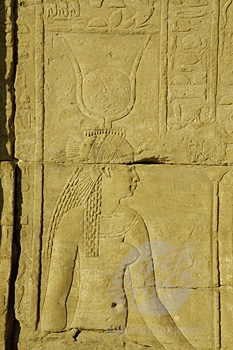
Denderah is about 50 km north of Luxor, on the west bank of the Nile River. The extant Temple of Hathor, built around 54 BCE, still stands in fairly good condition. It was built on the site of several previous temples, and was added to in the first century CE. Inside the hipostyle temple were shrines dedicated to Isis, Sokar, Hathor's sistrum, the gods of Lower Egypt, and Re, among others.
According to Anu tradition, Denderah was the birthplace of Isis and Osiris. There are several wall carvings depicting Isis throughout the Temple, including the one pictured here, which depicts her with the solar disk and horns which are also associated with Hathor.
Thursday, March 08, 2007
Who is Kwan Yin?
 Kwan Yin is revered in Buddhism as the Bodhisattva of Compassion. She is also known by the names Guanyin, QuanYin and Kannon (the Japanese company Canon derived its name from this). A bodhisattva is one who was once human and achieved enlightenment, but chose to remain close to the human condition in order to provide guidance, rather than enter into Nirvana as a buddha. Kwan Yin is said to have been a student of Amitabha Buddha.
Kwan Yin is also known as the Goddess of Mercy and Compassion. She is sometimes seen as a Mother Goddess and a patron of sailors and fishermen. She is known as a protector of women and children, and one to approach when you desire children. She is a source of unconditional love, and a savior who frees humans from karmic woes. Some call her the Buddhist Madonna, and compare her role to that of Mary in the Christian tradition. Among some esoteric and new age groups, she is referred to as one of the Ascended Masters.
In some depictions, she is shown with many arms, reflecting her desire to reach out to as many as possible. Sometimes she is seated on a white lotus, or holds one in her hand. She is also often depicted holding a small vase, sometimes held upright and sometimes turned on its side, pouring out the "Waters of Life", a symbol of Her mercy and compassion.
Wednesday, March 07, 2007
Sunday, February 25, 2007
For Brighid

Holy Water, Sacred Flame
Brigid, we invoke your name
Bless my head, my hands, my heart
Source of healing, song and art
Sunday, February 18, 2007
Book Review: Ishmael
Ishmael: An Adventure of the Mind and Spirit by Daniel Quinn. Published by Bantam Books, 1992. ISBN: 0-553-37540-7.
This book came to me by way of a house guest who left it behind. I finally decided to pick it up and read it. I am so glad I did! The story is written in the first person and, like The Celestine Prophecy, we never learn the main character's name or gender. The main character sees an ad in a paper that says: "Teacher seeks pupil. Must have an earnest desire to save the world. Apply in person." Pessimistic yet intrigued, the character shows up at the address in the ad and begins a journey toward understanding "how things came to be this way". The teacher leads the pupil through discussions of human history, Mother Culture, and a bit of theology, until the pupil learns the answer to "how things came to be this way" and is able to envision an alternative future for planet Earth.
With the current conversations around Global Warming, the destruction of the rainforests and war, this book is a great resource for finding a language that most people can relate to. It is a serious discussion of the state of the world that includes humor and a path to understanding "how things came to be this way." It is an easy and quick read. I highly recommend it!
This book came to me by way of a house guest who left it behind. I finally decided to pick it up and read it. I am so glad I did! The story is written in the first person and, like The Celestine Prophecy, we never learn the main character's name or gender. The main character sees an ad in a paper that says: "Teacher seeks pupil. Must have an earnest desire to save the world. Apply in person." Pessimistic yet intrigued, the character shows up at the address in the ad and begins a journey toward understanding "how things came to be this way". The teacher leads the pupil through discussions of human history, Mother Culture, and a bit of theology, until the pupil learns the answer to "how things came to be this way" and is able to envision an alternative future for planet Earth.
With the current conversations around Global Warming, the destruction of the rainforests and war, this book is a great resource for finding a language that most people can relate to. It is a serious discussion of the state of the world that includes humor and a path to understanding "how things came to be this way." It is an easy and quick read. I highly recommend it!
Friday, February 02, 2007
Brighid Speaks
There is a dark place deep within you
Search, and you will know it there
Do not fear the darkness
For I am the darkness
It is in the darkness that the seed sprouts
It is in the darkness that the chick grows
It is the darkness that holds the greatest potential
There are things I can only teach you in that place of internal winter
Where all things are possible and all visions true
One of these Truths is this: the darknes gives birth to light
For I am the spark of the Universe
The fire of Truth that burns in your heart
The fire of insight and passion that burns in your belly
It is my Fire that sings in the Blood of the Poets
Those who know the darkness, embrace it,
And know that Spring always comes
My gift of Poetry is Truth
Embrace the darkness within you
Find what longs to be birthed
Sing the fire into being
And feel the words of power burn within you
I am Brighid.
I am Poetry.
c. Bansagart 2000
Search, and you will know it there
Do not fear the darkness
For I am the darkness
It is in the darkness that the seed sprouts
It is in the darkness that the chick grows
It is the darkness that holds the greatest potential
There are things I can only teach you in that place of internal winter
Where all things are possible and all visions true
One of these Truths is this: the darknes gives birth to light
For I am the spark of the Universe
The fire of Truth that burns in your heart
The fire of insight and passion that burns in your belly
It is my Fire that sings in the Blood of the Poets
Those who know the darkness, embrace it,
And know that Spring always comes
My gift of Poetry is Truth
Embrace the darkness within you
Find what longs to be birthed
Sing the fire into being
And feel the words of power burn within you
I am Brighid.
I am Poetry.
c. Bansagart 2000
Thursday, February 01, 2007
Ritual for Imbolc
Review the holiday of Imbolc.
Light a candle and dedicate it to Brighid using either the Gaelic words or their English translation below:
Brighid bean oirdheach
Lasrach grad
Fetaim lasrach soillse
thoir coire sinne ris a bheatha
mhaireanach.
Brighid, excellent lady,
Sudden Flame,
May the fiery bright sun
Take us to
The lasting reign.
When we respect the earth, the land itself becomes a magic cauldron, full of abundance. The Earth is the Great Mother of all life. The health of the Earth is reflected in the health of our own physical bodies as well.
Today we focus our energies on sending healing to the Earth and honoring her gifts to us: water, fire, soil, wind, food, shelter.
Send healing energy to the Earth. As you are moved, feel free to voice your thanks to the Earth for her gifts, and any wishes you have for the healing of the earth.
Honor the earth in a phsyical way. You can work with clay to create a symbol of the earth for your altar, dig in your garden, or wiggle your toes in the sand at the shore.
A Celtic Blessing:
Deep peace of the running wave to you
Deep peace ofthe flowing air to you
Deep peace of the quiet earth to you
Deep peace of the shining stars to you
Deep peace of the gentle night to you
Moon and stars pour the healing light on you
Deep peace to you
c. Bansagart 2004
Light a candle and dedicate it to Brighid using either the Gaelic words or their English translation below:
Brighid bean oirdheach
Lasrach grad
Fetaim lasrach soillse
thoir coire sinne ris a bheatha
mhaireanach.
Brighid, excellent lady,
Sudden Flame,
May the fiery bright sun
Take us to
The lasting reign.
When we respect the earth, the land itself becomes a magic cauldron, full of abundance. The Earth is the Great Mother of all life. The health of the Earth is reflected in the health of our own physical bodies as well.
Today we focus our energies on sending healing to the Earth and honoring her gifts to us: water, fire, soil, wind, food, shelter.
Send healing energy to the Earth. As you are moved, feel free to voice your thanks to the Earth for her gifts, and any wishes you have for the healing of the earth.
Honor the earth in a phsyical way. You can work with clay to create a symbol of the earth for your altar, dig in your garden, or wiggle your toes in the sand at the shore.
A Celtic Blessing:
Deep peace of the running wave to you
Deep peace ofthe flowing air to you
Deep peace of the quiet earth to you
Deep peace of the shining stars to you
Deep peace of the gentle night to you
Moon and stars pour the healing light on you
Deep peace to you
c. Bansagart 2004
Sunday, December 24, 2006
Winter Solstice - Part 2
We gather together in homes and churches and synagogues, celebrating the light that will return to us. This is the time of year for sharing with the community the hope and faith that the light always returns.
Take a few moments and think about your life at this time.
Where is the darkness? Have you embraced it?
Where does this darkness need to be transformed?
Where do you need to see the light at the end of the tunnel, the rebirth of the sun/son?
What needs to be reborn in you, in your life?
What hope and promise of enlightenment do you crave?
As you are ready, light a candle to represent what you wish to give birth to during this season. If you wish, you can speak your wish out loud; giving voice to our wishes puts our intention out to the universe. You may do this for as many wishes as you would like.
This is the time of the Solstice, the longest night of the year. Now darkness triumphs, and yet gives way and changes into light. The breath of nature is suspended: all waits for the return of the sun/son. We watch for the coming of dawn, the return of hope and the promise of summer. This is the stillness behind motion, when time itself stops; the center which is also the circumference of all. Knowing that without darkness, there is no light, we breathe in the stillness, the great knowledge that all things are possible.
Take a few moments and think about your life at this time.
Where is the darkness? Have you embraced it?
Where does this darkness need to be transformed?
Where do you need to see the light at the end of the tunnel, the rebirth of the sun/son?
What needs to be reborn in you, in your life?
What hope and promise of enlightenment do you crave?
As you are ready, light a candle to represent what you wish to give birth to during this season. If you wish, you can speak your wish out loud; giving voice to our wishes puts our intention out to the universe. You may do this for as many wishes as you would like.
This is the time of the Solstice, the longest night of the year. Now darkness triumphs, and yet gives way and changes into light. The breath of nature is suspended: all waits for the return of the sun/son. We watch for the coming of dawn, the return of hope and the promise of summer. This is the stillness behind motion, when time itself stops; the center which is also the circumference of all. Knowing that without darkness, there is no light, we breathe in the stillness, the great knowledge that all things are possible.
Thursday, December 21, 2006
Winter Solstice - part 1
We have all noticed the days growing shorter and the nights longer as winter approaches. We complain when we remember how much we did outside last summer when the sun was up until 8:30 or 9:00 pm - and now it is gone at 5! The mornings, too, are dark, and we drive to work with our headlights on.
As we have approached the Winter Solstice, the days have gotten shorter and the nights much longer. If we pay attention to the world around us, we see that the summer flowers are gone, the hillsides are bare, and even here in Southern California, many trees have dropped their leaves. With less daylight hours, animals scurry to get everything done in a shorter amount of time, and the trees and perennial flowers are going into dormancy.
At the Winter Solstice, the sun reaches its southernmost point, rising the latest and setting the earliest of any time of the year. In the ongoing cycles of light and dark, darkness wins out. The sun seems to stand still for several days, rising at the same time and same place; but then, it begins to rise earlier and set later as the cycles continue in their spiral dance.
Our inner journey reflects the cycles of Nature around us. This is the time for shortening our days, scurrying to get things done during the shorter days. Some of us struggle with the weight of the darkness, not sure whether we will see the light again. Others of us enjoy this season the most: cleaning, shopping, cooking, and visiting with loved ones. Most of us seem to swing back and forth between the lightness and the darkness. This is the time to hold in our minds the promise of spring and rebirth. The darkness is strongest just before the dawn. There is always a light at the end of the tunnel.
This is nothing new in the history of humanity. Our ancestors struggled with the same issues, even without shopping malls. As the days grew shorter and the nights longer, as the sun seemed to stand still on the horizon, there must have been the fear that perhaps the days would grow shorter and shorter until there was only night. Perhaps the sun would not come back and they would never see the light again. We know that the sun has always returned, and yet, we can imagine what would happen if it didn't. We can imagine what our ancient ancestors must have thought, without electricity to light their evenings. What if it was always this dark and cold? How could they exist like this forever?
Around the world, the darkness and the fear that the winter brought gave birth to festivals and rituals that hailed the gradual lengthening of days after the winter solstice. All of these celebrations involved the lighting of fires to symbolically rekindle the sun, the triumph of the light and life over darkness and death. The entire community would gather, celebrating together, telling stories and feasting.
From what we know, the first Winter Solstice holidays were celebrated in Egypt over 4000 years ago. Mesut-re celebrated the birth of the Sun God Ra, who was later merged with Horus, the child of Isis. The Babylonians took up the celebration, holding the festival of Zagmuk in honor of the creator/sun god Marduk. by the time the holiday spread to Rome, it was a chance to honor Jupiter's defeat of Saturn in the festival of Saturnalia as the new year defeated the old. The Jewish people celebrate Hannakuh, the Festival of Lights, at this time, lighting the 8-tapered menorah in honor of religious freedom and the ability to hold the darkness at bay.
In Northern Europe, Yule was celebrated as the rebirth of the sun. The word "Yule" comes from the Norse word meaning "wheel", the Wheel of the Year. In ancient days, a druid would cut the sacred mistletoe from the mighty oak; evergreen trees were brought into the home to remind everyone of growth and life. Candles were lit to simulate the brightness of mid-day. A Yule Log was burned for 12 days, helping the Mother Goddess give birth to the sun-god, symbolizing the warmth and continuing light of the sun. By the time Christianity developed, winter solstice holidays were well-entrenched in peoples' minds. It made perfect sense to include the celebration of Jesus' birth with the birth of all other sun gods and sons of god. One of the newest Festivals of Light is Kwanzaa, an African-American celebration developed in the 1960s to honor unity, self-determination, collective work and responsibility, cooperative economics, purpose, creativity and faith.
What did your culture or family call this holiday? What do you know about it?
How have you celebrated this season?
c. Bansagart 2003.
As we have approached the Winter Solstice, the days have gotten shorter and the nights much longer. If we pay attention to the world around us, we see that the summer flowers are gone, the hillsides are bare, and even here in Southern California, many trees have dropped their leaves. With less daylight hours, animals scurry to get everything done in a shorter amount of time, and the trees and perennial flowers are going into dormancy.
At the Winter Solstice, the sun reaches its southernmost point, rising the latest and setting the earliest of any time of the year. In the ongoing cycles of light and dark, darkness wins out. The sun seems to stand still for several days, rising at the same time and same place; but then, it begins to rise earlier and set later as the cycles continue in their spiral dance.
Our inner journey reflects the cycles of Nature around us. This is the time for shortening our days, scurrying to get things done during the shorter days. Some of us struggle with the weight of the darkness, not sure whether we will see the light again. Others of us enjoy this season the most: cleaning, shopping, cooking, and visiting with loved ones. Most of us seem to swing back and forth between the lightness and the darkness. This is the time to hold in our minds the promise of spring and rebirth. The darkness is strongest just before the dawn. There is always a light at the end of the tunnel.
This is nothing new in the history of humanity. Our ancestors struggled with the same issues, even without shopping malls. As the days grew shorter and the nights longer, as the sun seemed to stand still on the horizon, there must have been the fear that perhaps the days would grow shorter and shorter until there was only night. Perhaps the sun would not come back and they would never see the light again. We know that the sun has always returned, and yet, we can imagine what would happen if it didn't. We can imagine what our ancient ancestors must have thought, without electricity to light their evenings. What if it was always this dark and cold? How could they exist like this forever?
Around the world, the darkness and the fear that the winter brought gave birth to festivals and rituals that hailed the gradual lengthening of days after the winter solstice. All of these celebrations involved the lighting of fires to symbolically rekindle the sun, the triumph of the light and life over darkness and death. The entire community would gather, celebrating together, telling stories and feasting.
From what we know, the first Winter Solstice holidays were celebrated in Egypt over 4000 years ago. Mesut-re celebrated the birth of the Sun God Ra, who was later merged with Horus, the child of Isis. The Babylonians took up the celebration, holding the festival of Zagmuk in honor of the creator/sun god Marduk. by the time the holiday spread to Rome, it was a chance to honor Jupiter's defeat of Saturn in the festival of Saturnalia as the new year defeated the old. The Jewish people celebrate Hannakuh, the Festival of Lights, at this time, lighting the 8-tapered menorah in honor of religious freedom and the ability to hold the darkness at bay.
In Northern Europe, Yule was celebrated as the rebirth of the sun. The word "Yule" comes from the Norse word meaning "wheel", the Wheel of the Year. In ancient days, a druid would cut the sacred mistletoe from the mighty oak; evergreen trees were brought into the home to remind everyone of growth and life. Candles were lit to simulate the brightness of mid-day. A Yule Log was burned for 12 days, helping the Mother Goddess give birth to the sun-god, symbolizing the warmth and continuing light of the sun. By the time Christianity developed, winter solstice holidays were well-entrenched in peoples' minds. It made perfect sense to include the celebration of Jesus' birth with the birth of all other sun gods and sons of god. One of the newest Festivals of Light is Kwanzaa, an African-American celebration developed in the 1960s to honor unity, self-determination, collective work and responsibility, cooperative economics, purpose, creativity and faith.
What did your culture or family call this holiday? What do you know about it?
How have you celebrated this season?
c. Bansagart 2003.
Subscribe to:
Posts (Atom)
